Everything you need to know about vitamin A — from over-the-counter retinol to prescription tretinoin, plus PDRN, organic products, and how to build a routine that works.
Navigating the world of vitamin A skincare can feel overwhelming. From retinol to retinal to prescription tretinoin, each form promises smoother, clearer, younger-looking skin — but they are not created equal. This comprehensive guide breaks down the science, the differences, and everything you need to know to build an effective routine.
Part 1: Understanding the Vitamin A Family
What Is Retinol and What Does It Do for Your Face?
Retinol is the most well-known over-the-counter retinoid. It works by increasing skin cell production, helping to unclog pores, exfoliating the skin, and boosting collagen production, which can reduce the appearance of fine lines and wrinkles. It also reduces inflammation and prevents clogged pores.
Retinol is used for a range of skin concerns, including fighting acne, reducing wrinkles, reversing sun damage, and shrinking pores. According to the American Academy of Dermatologists, retinol can smooth out fine lines and wrinkles, improve uneven skin tone, pigmentation, and texture. It works by increasing how fast skin cells die and shed, which exfoliates the outer layer of skin and boosts collagen production.
Key Benefits of Retinol
Reduces fine lines and wrinkles • Improves skin texture and tone • Helps with acne and clogged pores • Reduces hyperpigmentation • Boosts collagen production
What Is Retinal (Retinaldehyde)?
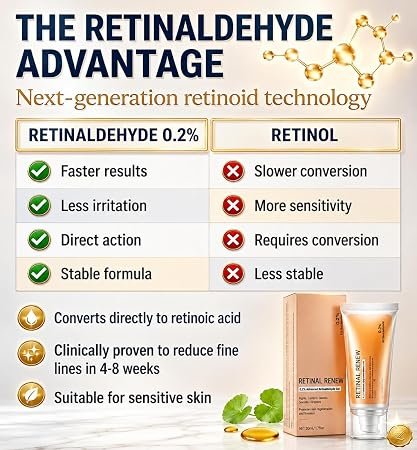
Retinal, also called retinaldehyde, is a form of vitamin A that sits between retinol and prescription retinoids in terms of strength. It is a direct precursor of retinoic acid, meaning it converts to the active form in just one step instead of two, making it work up to 11 times faster than retinol.
Retinal is often favored by experienced retinoid users looking for quicker visible results, including improved firmness, clarity, and reduced fine lines — though it may cause more sensitivity than retinol.
What Is Tretinoin?
Tretinoin is a prescription-strength retinoid and the active form of vitamin A (all-trans retinoic acid). It is used to treat acne and also to reduce fine wrinkles, dark spots, or rough skin on the face caused by sun damage. Tretinoin works by lightening the skin, replacing older skin with newer skin, and slowing down the way the body removes skin cells that may have been harmed by the sun.
For acne, tretinoin works by increasing production of new skin cells and unclogging pores. It decreases the cohesiveness of follicular epithelial cells, reducing microcomedo formation, and stimulates mitotic activity and increased turnover of follicular epithelial cells, causing extrusion of comedones.
Important Note
Tretinoin may reduce fine wrinkles but does not remove them or repair sun-damaged skin.
Part 2: Retinal vs. Retinol — The Key Differences
| Feature | Retinol | Retinal (Retinaldehyde) |
|---|
| Conversion Steps | 2 steps to retinoic acid | 1 step to retinoic acid |
| Speed of Action | Slower | Up to 11x faster |
| Potency | Mild to moderate | Moderate to strong |
| Irritation Potential | Lower | Higher than retinol |
| Stability | More stable | Less stable, needs special formulation |
| Availability | Over-the-counter | Over-the-counter |
| Best For | Beginners, sensitive skin | Experienced users wanting faster results |
Retinol is metabolized into retinal and then retinoic acid, and has been found to be less irritating than retinoic acid. Although retinal is less stable than retinol, it can be manufactured in a dark, oxygen-free environment to prevent degradation, and retinal-containing anti-aging products can be formulated to minimize the potential for skin irritation.
Retinaldehyde is the most potent retinoid available in over-the-counter products and can be converted in the skin in small quantities to retinoic acid. One study found that retinaldehyde is 10x more bioavailable than retinol and is gaining traction as the strongest over-the-counter retinoid.
Which Should You Choose?
- Choose retinol if you're new to retinoids, have sensitive skin, or want a gentler introduction.
- Choose retinal if you've used retinol before, want faster results, and can tolerate a bit more potency.
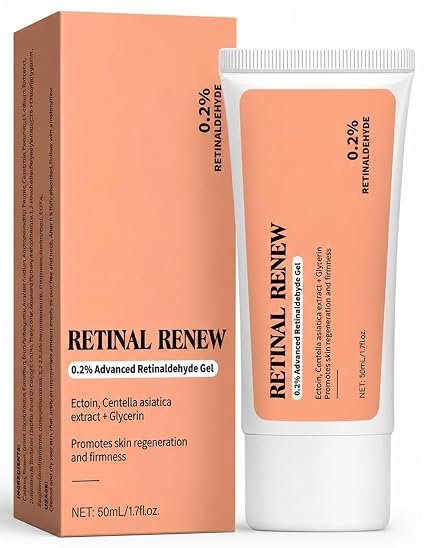
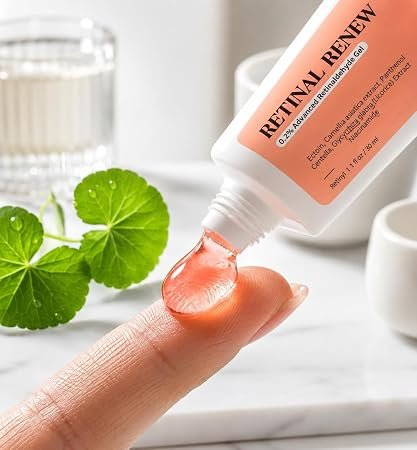
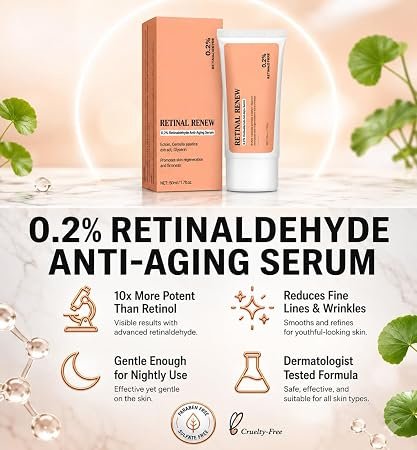
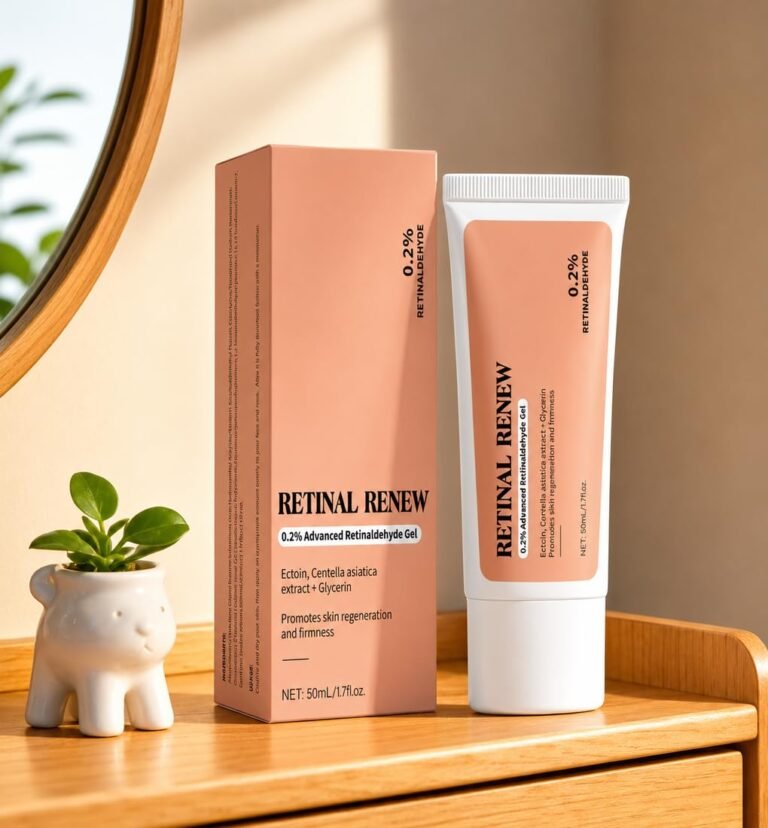
⭐ Editor's PickLORAVE Retinaldehyde Skin Booster 0.2% Advanced Gel
Retinal Renew · 50 ml / 1.7 fl oz
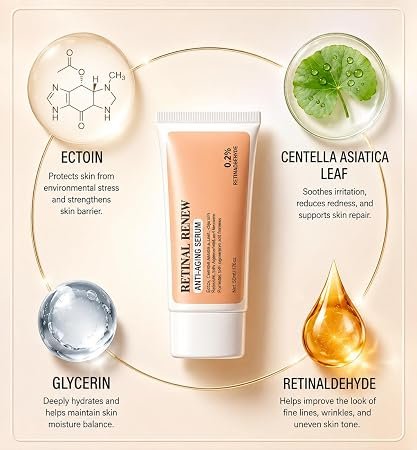
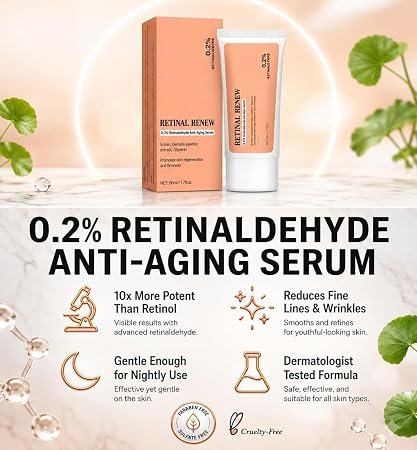
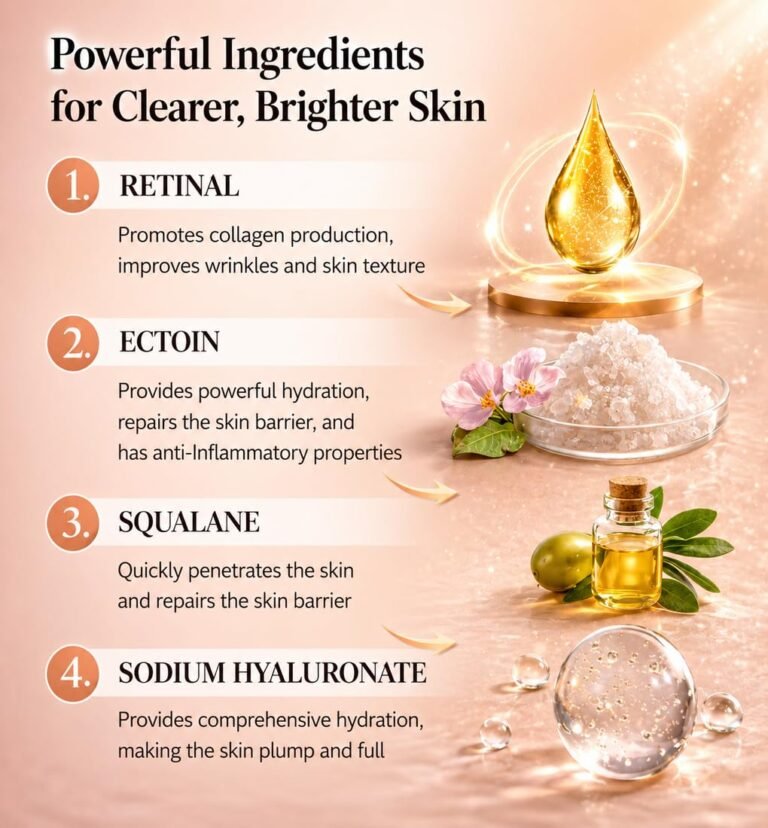
If you're ready to upgrade from retinol to a stronger, faster-acting retinoid, this 0.2% retinaldehyde gel is one of the most effective over-the-counter options available — and it comes at a budget-friendly price. Formulated with Centella Asiatica, Ectoin, and Glycerin, it firms the skin while soothing irritation, making it ideal for both face and neck.
Unlike many high-end retinal serums that cost $60+ for the same concentration, the LORAVE Skin Booster delivers clinical-level retinaldehyde at a fraction of the price — making it a smart choice for anyone wanting real results without overspending.
✨ 0.2% Retinaldehyde
🌿 Centella Asiatica
💧 Ectoin + Glycerin
🎯 Firms Skin
💪 Face & Neck
Part 3: Retinaldehyde Products — What to Look For
When shopping for retinaldehyde products, look for:
- Stabilized formulations — retinal is less stable than retinol and needs proper packaging (opaque, airless pumps)
- Concentration — common ranges are 0.05% to 0.1%
- Supporting ingredients — niacinamide, ceramides, or peptides to reduce irritation
- Clinical backing — look for brands that publish studies on their formulations
Clinical studies show that retinaldehyde-based creams can significantly reduce wrinkles, improve skin firmness and plumpness, and enhance skin tone homogeneity and radiance within one month of use. A study combining retinal 0.1% with azelaic acid 10% showed improvements in overall skin condition (87%), pimple size/severity (78%), number of pimples (74%), calmer skin feel (95%), and reduced oiliness (82%).
Part 4: How to Start a Skincare Routine
Building a skincare routine doesn't have to be complicated. Dermatologists recommend starting with three essential steps:
Morning Routine
- Cleanser — Use a gentle, fragrance-free cleanser to remove overnight buildup
- Antioxidant serum (optional) — Vitamin C protects against environmental damage
- Moisturizer — Restores water and reinforces the skin barrier
- Sunscreen — Broad-spectrum SPF 30 or higher, every single day
Evening Routine
- Cleanse — Remove makeup, sunscreen, and daily grime
- Treatment — One active ingredient (like a retinoid, vitamin C, or an exfoliating acid)
- Moisturizer — Seal in hydration and support overnight repair
The Golden Rule for Beginners
Start simple. Begin with a gentle cleanser, a fragrance-free moisturizer, and a broad-spectrum sunscreen with SPF 30 or higher daily. Only add one new product at a time, and introduce actives gradually.
Part 5: Can You Use Retinol After a Salicylic Acid Face Wash?
Yes, you can use salicylic acid and retinol together. A rinse-off salicylic acid cleanser is safe to use in the same evening routine as a leave-on retinol serum.
How to Do It Safely:
- Use salicylic acid first — apply it after cleansing, wait for it to absorb, then follow with retinol
- Finish with a rich moisturizer to reduce irritation
- Start slowly — use your salicylic acid cleanser (which rinses off) and then apply your retinol
- Alternative approach — use salicylic acid in the morning and retinol at night to minimize irritation
Who should be cautious? Those with sensitive or dry skin may find the combination too irritating. If you experience redness, peeling, or burning, separate them into different routines or different days.
Part 6: Can You Use Retinol While Pregnant?
The Short Answer
No, it's generally recommended to avoid retinoids during pregnancy.
Pregnant women should not use certain skin medications as they can cause birth defects in babies. If you are pregnant, breastfeeding, or trying to conceive, avoid retinol and retinoids — these are vitamin A-derived tablets or creams.
Current guidance generally advises caution or avoidance during pregnancy because of the known teratogenic effects of oral isotretinoin, a systemic retinoid associated with severe birth defects. Even though topical absorption is lower, many healthcare providers recommend avoiding topical retinoids entirely during pregnancy as a precaution.
Safe Alternatives During Pregnancy:
- Azelaic acid — The American College of Obstetricians and Gynecologists suggests glycolic acid or azelaic acid for treating acne during pregnancy
- Glycolic acid
- Niacinamide
- Vitamin C
Always consult your doctor before using any skincare product during pregnancy.
Part 7: Does Retinol Help with Acne Scars?
Yes, retinoids can help improve the appearance of acne scars. Topical retinoids, both prescription and over-the-counter, can help improve the appearance of acne scars and rough skin texture.
Retinol reduces scarring and inflammation, making it beneficial for people with acne scars or hyperpigmentation. It promotes cell turnover, reducing swelling associated with acne and acne scars. Retinol's ability to stimulate collagen production plays a role in smoothing out scar tissue.
Dermatologists often recommend retinol to support skin renewal. With consistent use, it may help improve the appearance of acne scars gradually. For best results, combine retinoids with other scar-fading ingredients like azelaic acid and BHA, which address active acne and its aftermath simultaneously.
Important: Retinoids work best on atrophic scars (indented scars) and post-inflammatory hyperpigmentation (dark marks). For severe or deep scars, professional treatments like microneedling, lasers, or chemical peels may be needed.
Part 8: Does Tretinoin Help with Blackheads?
Yes, tretinoin is an effective treatment for blackheads. Blackheads (open comedones) can be treated with creams that contain salicylic acid or tretinoin.
Tretinoin works by increasing skin cell turnover and keeping pores clear. It safely unplugs hyperkeratinized oil ducts to eliminate blackheads, whiteheads, and active pustules from forming. Tretinoin is excellent for unclogging pores, preventing blackheads, and promoting skin renewal, making it ideal for long-term prevention.
For blackheads specifically, tretinoin may be more effective than